The kitchen sink is one of the hardest-working fixtures in the home and one of the most visible. Before committing to a material, it helps to understand how each option holds up to daily use, how it fits the overall kitchen design, and what kind of maintenance it actually requires over time.
This blog will discuss three of the most widely chosen sink materials: stainless steel, granite composite, and fireclay, so you can make a confident decision before your next kitchen renovation.
Why Kitchen Sink Material Matters More Than You Think
A kitchen sink takes on a lot every single day. Hot pots pulled straight from the stove, heavy cast iron, acidic citrus and tomato, and near-constant water exposure. The material you choose determines how well the sink handles all of that, and the differences between materials become obvious within the first year of use. Scratch resistance, heat tolerance, stain behavior, and impact durability are not equal across the board.
Material also shapes the structural side of the installation. Heavier options like fireclay and granite composite require reinforced cabinet support to carry the load. Countertop pairing matters, too. A sink that clashes in tone or texture with the surrounding stone pulls the entire kitchen design out of balance. And beyond the purchase price, the real cost of ownership includes cleaning products, potential resealing, and how the finish holds up without refinishing after five years. Getting the material right from the start saves money and frustration.
Stainless Steel Kitchen Sinks
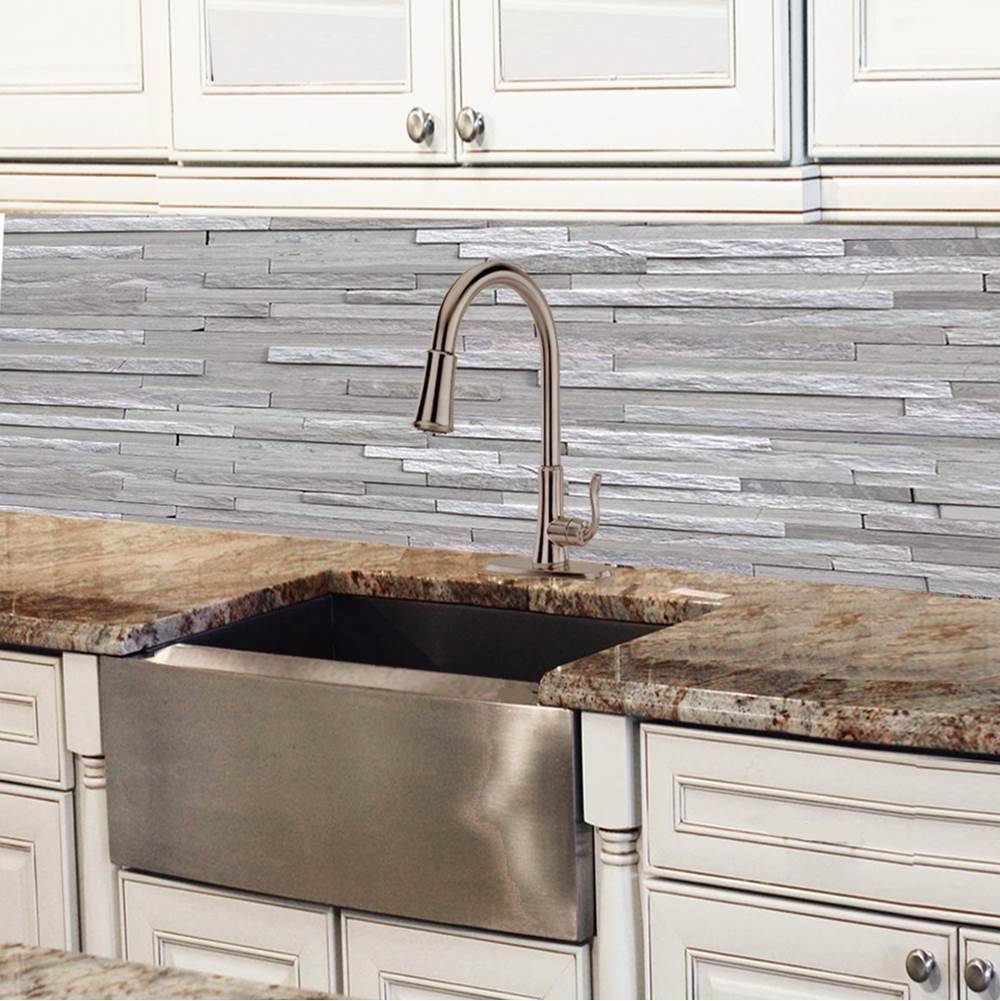
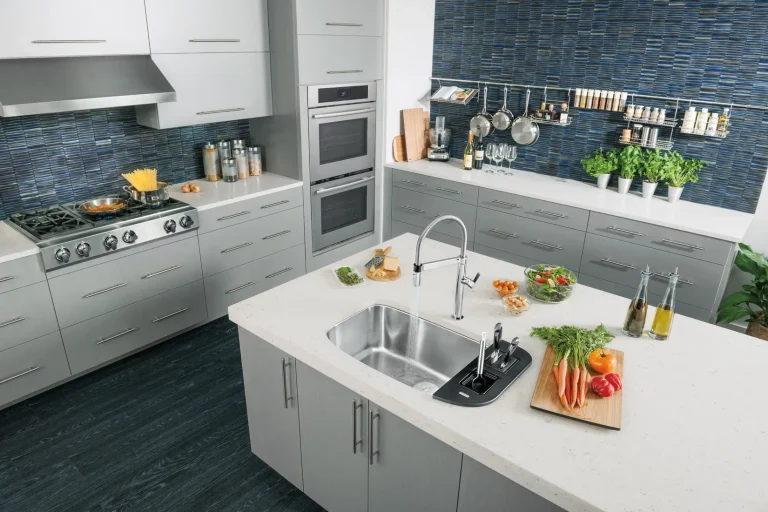
Stainless steel remains the most widely used sink material, and the reasons are straightforward. It handles heat, resists impact, and works across nearly every kitchen style without requiring much coordination effort. The key variable is gauge thickness. The lower the gauge number, the thicker the steel. A 16-gauge sink feels noticeably more solid than an 18-gauge option, produces less noise when water hits the basin, and holds its shape better under years of heavy use. Thicker gauges also tend to include sound-dampening pads underneath, which cut down on the hollow ring that thinner sinks are known for.
The trade-off is surface visibility. Scratches accumulate with daily scrubbing, though a brushed finish hides them far better than a polished one. Water spots from mineral-heavy tap water are common and need regular wiping to keep the sink looking sharp. For modern, transitional, and high-use kitchens, stainless steel is a practical, cost-effective choice that coordinates well with brushed nickel, chrome, and matte black fixtures.
Granite Composite Kitchen Sinks
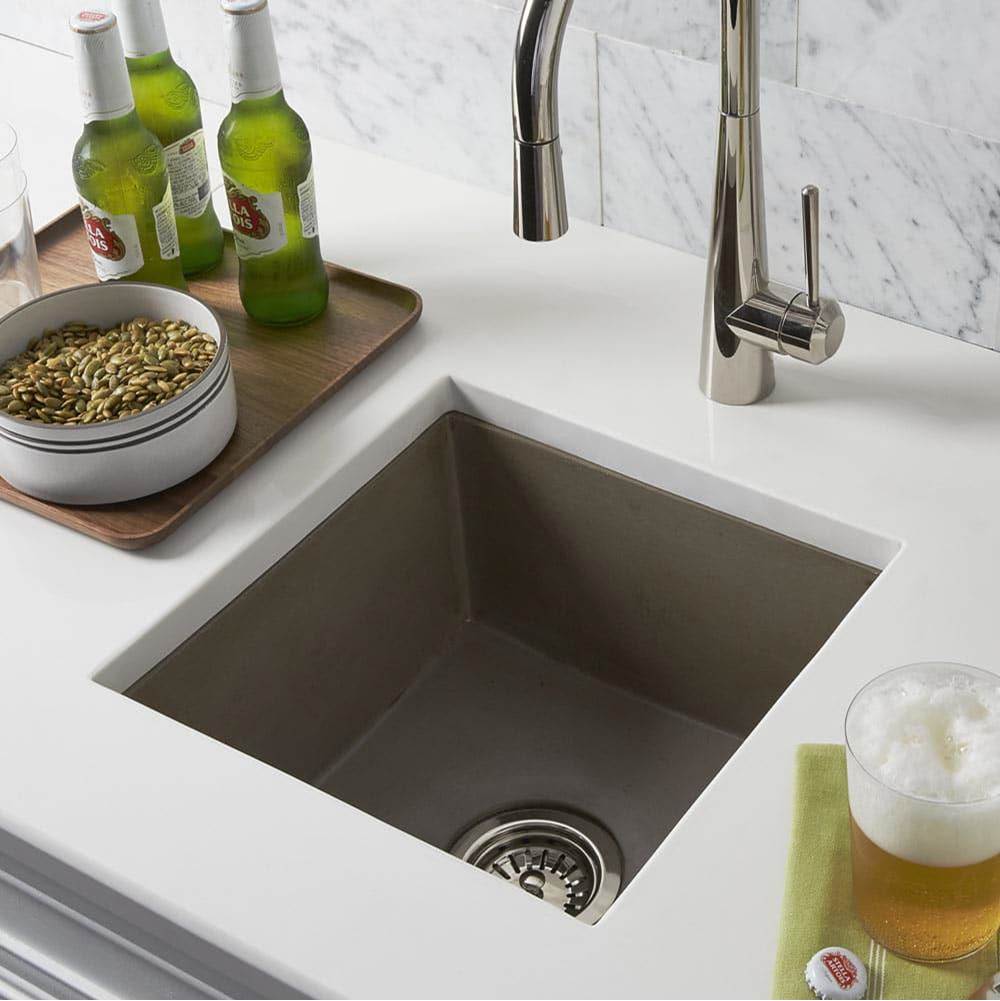
Granite composite sinks are made from a mixture of granite stone dust and acrylic resin, typically around 80% granite by composition. The result is a dense, non-porous surface that outperforms stainless steel in both scratch resistance and heat tolerance. Unlike natural stone, granite composite does not require regular sealing, though occasional treatment with a composite-specific conditioner helps maintain the finish.
The color range is one of the strongest selling points. Granite composite sinks come in matte black, gray, taupe, and white, and they naturally coordinate with quartz and stone countertops. This makes them a strong fit for contemporary kitchens where the sink needs to blend with or complement the surrounding surface. Weight is considerable, so cabinet support should be confirmed before installation. For kitchens that see heavy daily use and call for something more refined than stainless, granite composite sits in a strong position between durability and design.
Fireclay Kitchen Sinks
Fireclay sinks are formed by molding ceramic clay and firing it at temperatures that often exceed 1,800 degrees Fahrenheit. That process produces a dense, non-porous material with a thick, glazed finish that resists staining and does not absorb odors. The sink feels substantial, looks refined, and holds its surface without sealing.
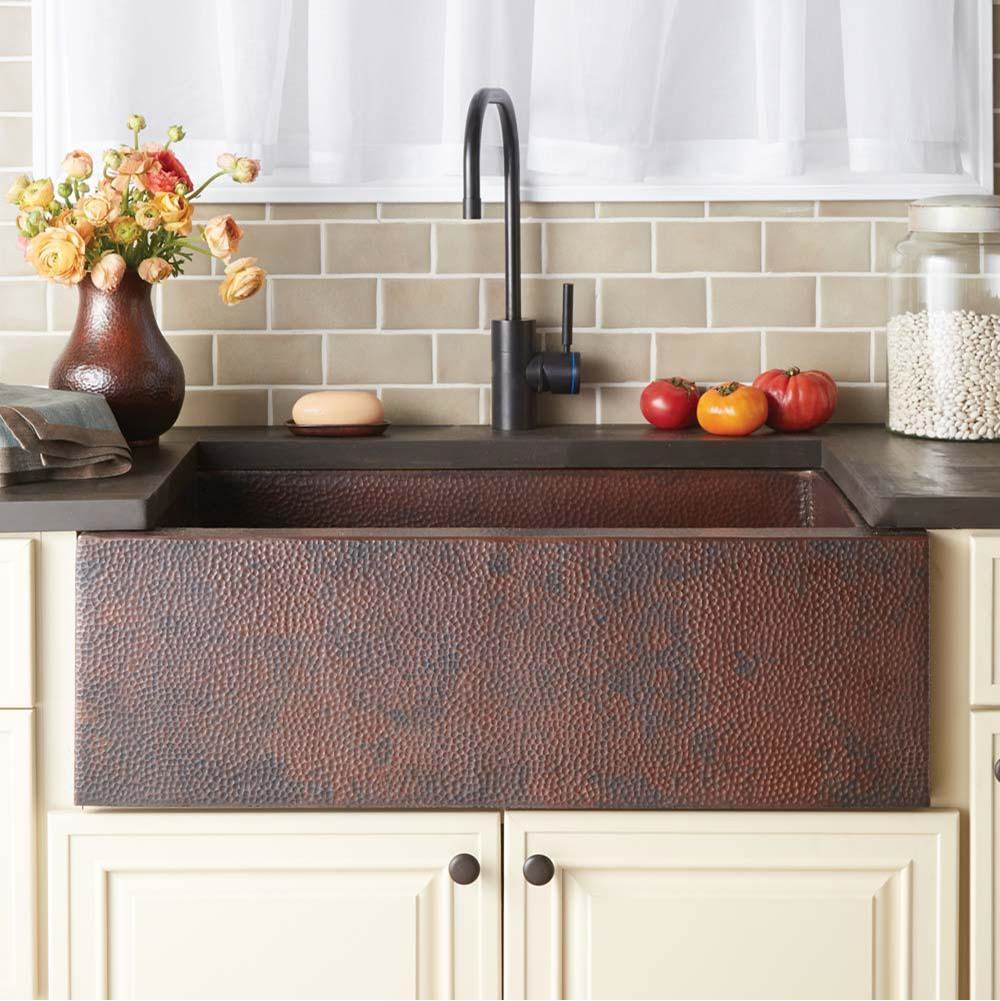
The glaze stands up well to most everyday use, but fireclay carries a chip risk when heavy cast iron or ceramic cookware drops directly onto the basin. A protective sink grid placed at the floor of the basin absorbs that impact and prevents direct contact with the surface. Fireclay is closely tied to farmhouse and apron-front configurations, where the exposed front panel becomes a design feature in its own right. Installation requires cabinet reinforcement, and the apron-front format often calls for custom cabinetry or modification of existing cabinet faces. For transitional and design-forward kitchens, fireclay brings a classic, polished look that few other materials match.
How the Three Materials Compare Side-by-Side
Each material strikes a different balance across durability, maintenance, and price. Stainless steel handles impact and heat well, cleans easily, and sits at the lower end of the price range, making it the most accessible option for high-use kitchens. Granite composite offers superior scratch and heat resistance with a broader color palette, landing in the mid-to-upper price range and pairing well with stone countertops. Fireclay delivers the most refined aesthetic with strong stain resistance, but comes at a premium and requires careful handling to protect the glaze.
On the maintenance side, stainless steel requires the least effort but shows water spots and fine scratches most readily. Granite composite needs occasional conditioning but resists most daily damage without much attention. Fireclay benefits from non-abrasive cleaners to protect the glaze.
Choosing the Right Sink Material for Your Kitchen
Household volume is one of the first things we consider when guiding a sink selection. A busy kitchen with multiple daily cooks benefits from granite composite or a thick-gauge stainless steel. A lower-traffic kitchen with a strong design direction may be the right setting for fireclay, where the aesthetic payoff is worth the added care.
Countertop and cabinet finish coordination matters as much as the sink material itself. A matte black granite composite reads differently against white quartz than it does against a dark concrete-look surface, and getting that pairing right is easier when you can see both materials together. Undermount configurations work well with stainless steel and granite composite. Fireclay almost always calls for an apron-front setup that shapes the cabinet design around it. When aesthetics and practicality feel like they are pulling in different directions, seeing the options side by side in person usually resolves the question quickly.
FAQs
Which kitchen sink material is the most durable for everyday use?
Granite composite and stainless steel are the top performers for high-use kitchens. Granite composite resists scratches and heat at a level stainless steel does not match, but a thick 16-gauge stainless sink holds up well under daily impact.
Can a fireclay sink chip, and how do I prevent it?
Yes, fireclay can chip when heavy cast iron or ceramic cookware drops directly onto the basin surface. A protective sink grid placed at the bottom of the basin absorbs impact and prevents cookware from contacting the surface directly.
Is stainless steel or granite composite better for a modern kitchen?
Both work well in modern kitchens, but they read differently. Stainless steel in a brushed finish coordinates naturally with chrome, brushed nickel, and matte black hardware. Granite composite in black or dark gray adds contrast and visual weight to a contemporary space, particularly when paired with light countertops.
Pick the Right Choice at Bath and Bronze
Stainless steel, granite composite, and fireclay each bring something distinct to a kitchen, and the right choice depends on how the space is used, how the material wears, and how it fits the overall design. Seeing all three in person makes the decision considerably easier than comparing photos.
Visit the Bath and Bronze showroom in Irmo, South Carolina, to explore kitchen sink options in person and compare finishes, configurations, and materials with our team’s guidance.