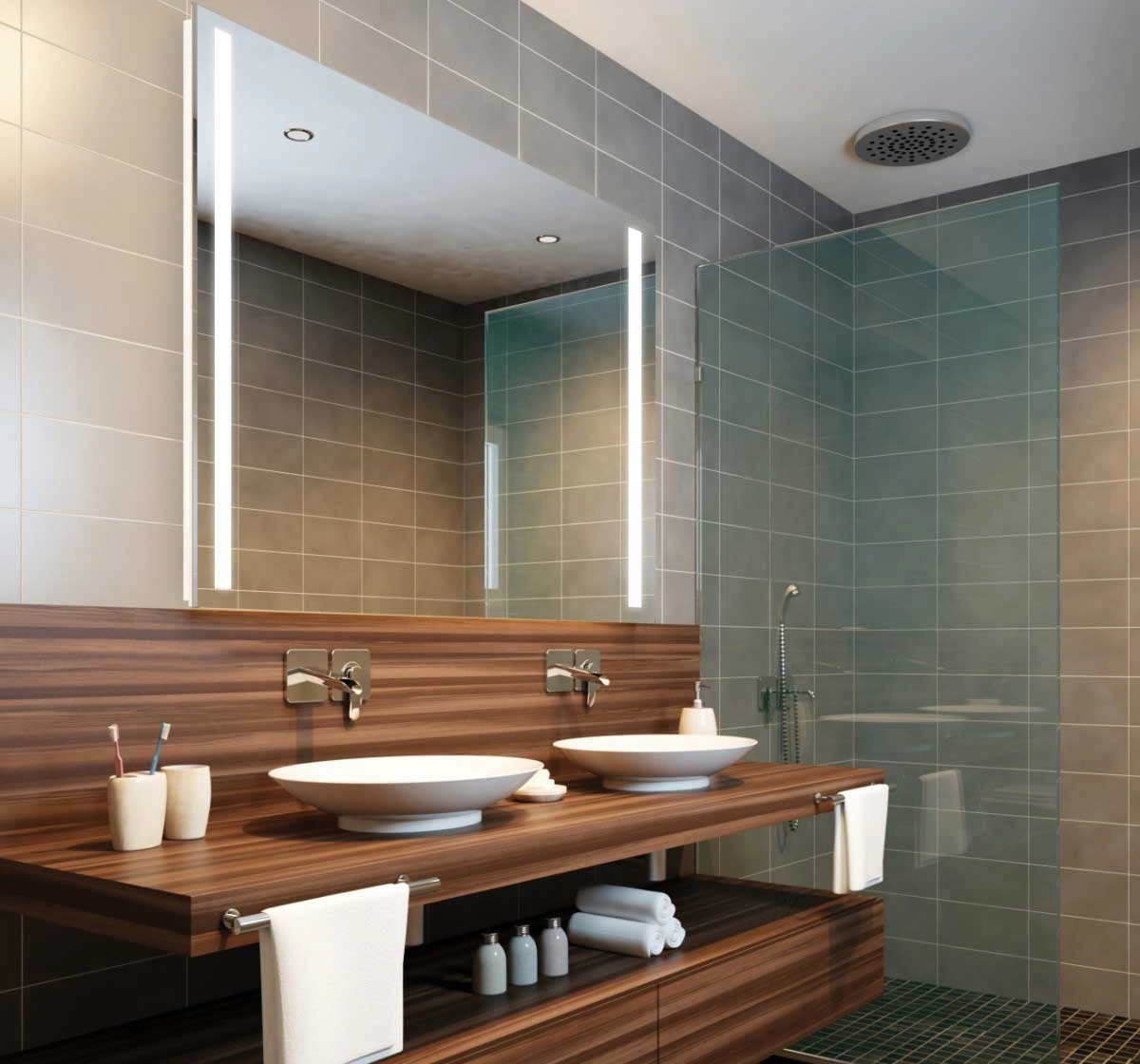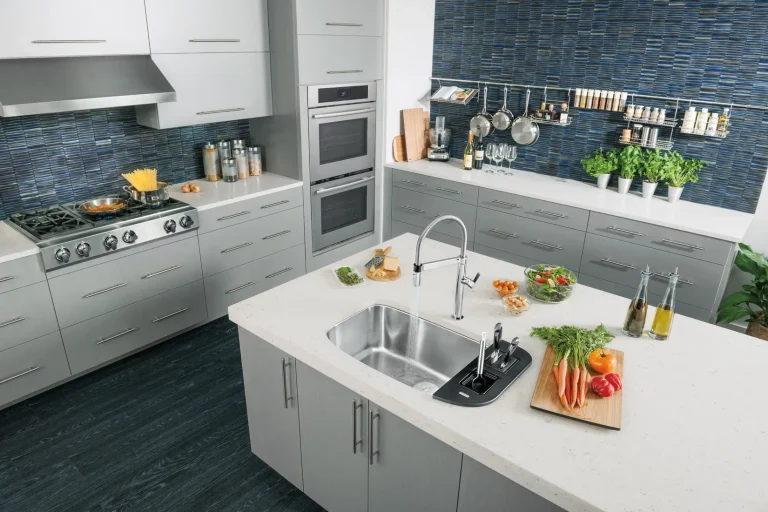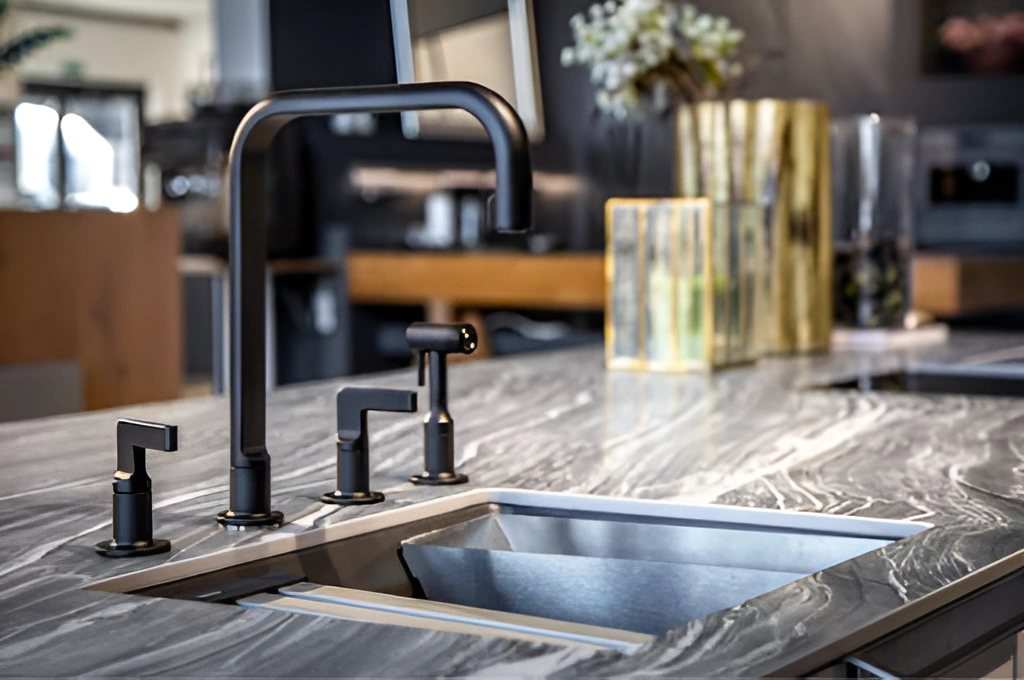
The kitchen sink and faucet are two of the most-used fixtures in the home and two of the most visible. When they work together, the pairing anchors the entire kitchen. When they don’t, it shows, even if you can’t immediately explain why. The finish feels off, the scale looks wrong, and the space reads assembled rather than designed.
This blog covers how to approach kitchen sink and faucet selection as a coordinated decision, from configuration and style to finish, scale, and mounting.
Start with the Sink: Configuration Shapes Everything
We always recommend starting with the sink before selecting a faucet. The sink’s profile, material, and basin setup determine which faucet options will actually work, both visually and technically.
Undermount sinks sit below the countertop for a clean, seamless look and pair well with a wide range of faucet styles. Farmhouse sinks with an exposed apron front carry a stronger visual statement, so the faucet needs enough presence to hold its own. Drop-in sinks offer installation flexibility but have a visible rim that affects the overall aesthetic.
Single-bowl configurations give you a wide, open basin and more faucet placement options. Double-bowl setups require closer attention to spout reach, since the faucet must serve both sides effectively. Sink depth matters too. A deep basin needs a faucet with enough height to clear the rim without creating an awkward angle at the wrist.
Sink material also points you toward a finish direction. Stainless steel reads well with brushed nickel, chrome, or matte black. Fireclay and composite sinks, typically white or neutral in tone, open the door to stronger contrasts, including matte black or brushed gold. These are kitchen sink combinations worth thinking through before you land on a faucet.
Match the Faucet Style to Your Kitchen’s Design Direction
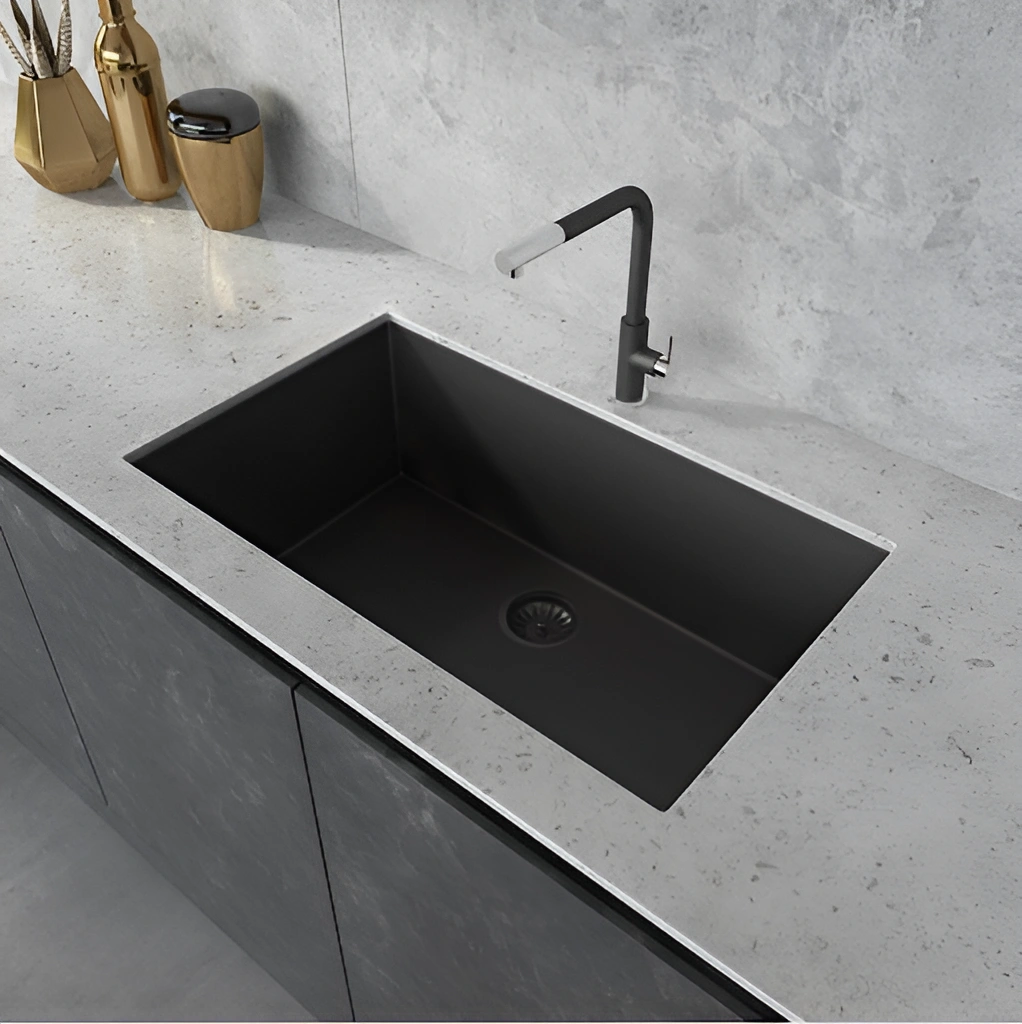
Kitchen faucet styles follow the same logic as the rest of the kitchen’s design. The faucet should feel like it belongs in the space, not like it was chosen separately and dropped in later.
Modern kitchen faucets favor clean lines, minimal detail, and finishes like matte black or brushed nickel. Traditional kitchens tend to suit bridge faucet silhouettes, with two separate handles and a visible horizontal connection that references classic plumbing design. Transitional kitchens, which blend traditional and contemporary elements, work well with pull-down styles. The profile is simple enough to feel current while staying versatile across different cabinet and countertop combinations.
Professional-style kitchens, often built around commercial-grade appliances and heavy materials, suit high-arc faucets with a commercial feel. The pronounced curve and heavier visual weight match the scale of those spaces. These kitchen design ideas apply whether you’re renovating from scratch or updating one section at a time.
Coordinate Finishes Without Overthinking It
Finish coordination separates a kitchen that looks considered from one that looks assembled. We guide customers to consider the faucet finish alongside the sink material and cabinet hardware, since all three are always visible together.
Matching finishes across the faucet, hardware, and visible accessories creates a consistent thread through the kitchen. Mixing finishes can work when it’s intentional. The approach we follow is to keep it to two metal finishes, with one in a clear dominant role and the other playing a supporting part.
Brushed nickel pairs well with warm wood tones. Matte black works cleanly against white cabinetry. Polished chrome holds up in classic kitchen settings where bright surfaces and traditional details are already present. On the practical side, matte and brushed finishes resist fingerprints and water spots better than polished options. For a surface that sees daily contact, that’s a real consideration when matching sink and faucet selections.
Get the Scale Right: Height, Reach, and Clearance
A faucet that looks right in a photo can feel wrong once it’s installed. Scale is something we discuss before any customer commits to a selection.
Faucet height should be proportional to sink depth. A tall, high-arc faucet over a shallow sink creates unnecessary splash. A low-profile faucet over a deep basin makes everyday rinsing awkward. Spout reach is equally important. The spout should center comfortably over the drain, not sit too far forward or too far back in the basin.
High-arc modern kitchen faucets suit kitchens where large pots and deep basins are part of the daily routine. They provide the clearance needed to fill or rinse oversized cookware without tilting or repositioning. Low-profile faucets work better where overhead cabinetry comes down close to the countertop and vertical clearance is limited.
Think Through the Mounting Before You Commit
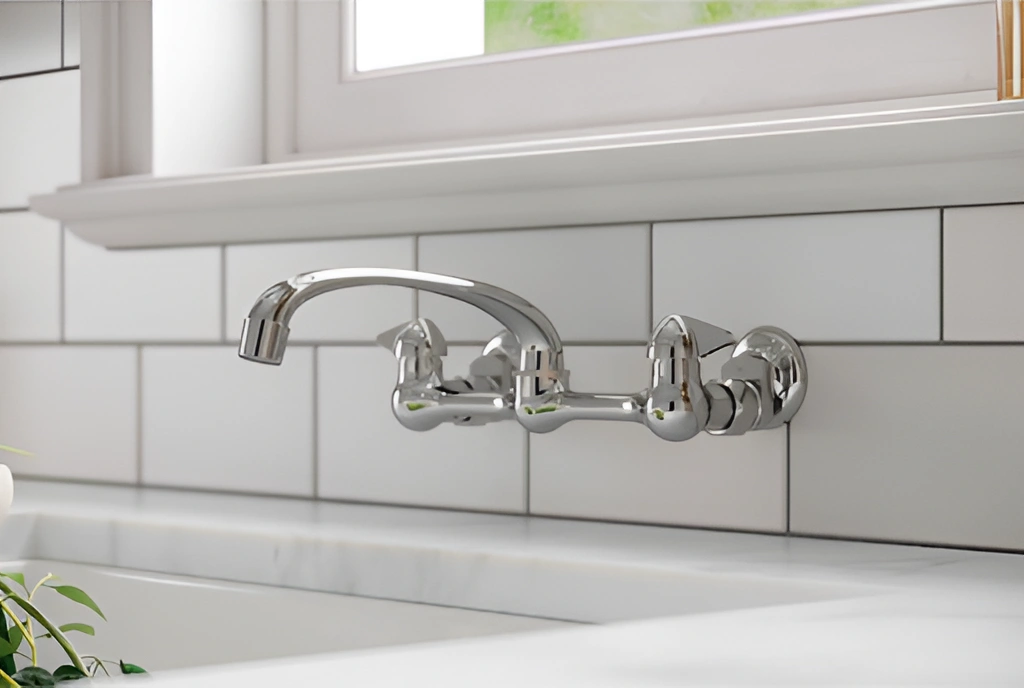
Mounting configuration is a technical detail with real consequences if overlooked. We confirm this before any purchase is finalized, because matching sink and faucet specs at this stage prevents costly changes later.
Deck-mounted faucets install into holes drilled in the sink or countertop. The number of holes and the spacing between them determine which faucets are compatible. A single-hole faucet needs one opening. A three-hole configuration accommodates a separate handle on each side with the spout centered between them. If you have a three-hole sink but prefer a single-handle kitchen sink and faucet pairing, an escutcheon plate covers the unused openings cleanly.
Wall-mounted faucets are a distinct category. They mount to the wall above the sink rather than the deck, which requires plumbing rough-in at the correct height before installation. That decision needs to happen early in a renovation, not at the finish-selection stage.
Frequently Asked Questions
Does my faucet finish have to match my sink exactly?
No. The sink material and faucet finish are separate elements, and contrast between them is often intentional. What matters is that the faucet finish coordinates with the cabinet hardware and other metal accents in the space, so the kitchen reads as considered rather than random.
How do I know if a faucet will fit my sink?
Start with hole count and spacing. Check the manufacturer’s compatibility specs before purchasing, and confirm those details match your sink’s existing configuration. Resources like the Delta faucet compatibility guide are useful starting points.
What kitchen faucet style works best in a modern kitchen?
Single-handle, high-arc, and pull-down styles tend to suit contemporary kitchens well. They read clean without extra visual detail. For finishes, matte black and brushed gold are both strong directions in modern kitchen design, particularly against white or two-tone cabinetry.
Style Your Kitchen Sink and Faucet at Bath & Bronze
The right kitchen sink and faucet pairing comes down to finish, scale, and function working together. Start with the sink configuration; let it guide the faucet style and finish; confirm the mounting before committing; and think through how the fixture will perform day-to-day. When those decisions align, the result feels deliberate. Explore our kitchen faucets collection, browse our kitchen sinks collection, or schedule a kitchen design consultation to work through the details with someone who knows the products.
Schedule a consultation with Bath & Bronze to compare kitchen sink and faucet combinations in person, or browse our curated kitchen collections online to start narrowing your selections.