You can install the cabinetry you love, pick a countertop that reads beautifully at noon, and still walk into a kitchen that goes flat the moment the sun drops. Nine times out of ten, the missing piece is lighting. Choosing the right fixtures can make or break your kitchen.
Good kitchen lighting fixtures brighten a room, and they also shape how finishes read, how safely you move through prep, and how the space feels throughout the day. When we help homeowners and designers pick fixtures, we weigh two things at once: what the room needs to function, and what it needs to feel finished. That balance is where solid kitchen lighting ideas begin.
This blog covers the three lighting layers we build around: task and statement fixtures, finish coordination, layout planning, energy-efficient options, and how our showroom team ties it together.
The Three Layers of Kitchen Lighting We Build Around
Designing a well-lit kitchen depends on three layers working together. Ambient lighting sets the overall brightness. Task lighting sharpens the surfaces where you cook and clean. Accent lighting adds depth and pulls the eye toward what matters. When these three run as a system, the room stays even and comfortable from morning to night.
Single-source lighting cannot pull this off. One ceiling fixture leaves a hot spot in the center and shadows along the counters, exactly where you need to see. Layering fixes that. It hands you control over mood, keeps work zones safe and visible, and lets the same kitchen shift from a rushed breakfast to a slow dinner without feeling like two different rooms. Our lighting collection is organized around this layered thinking, so every fixture has a clear job.
Task Lighting: Where Function Comes First
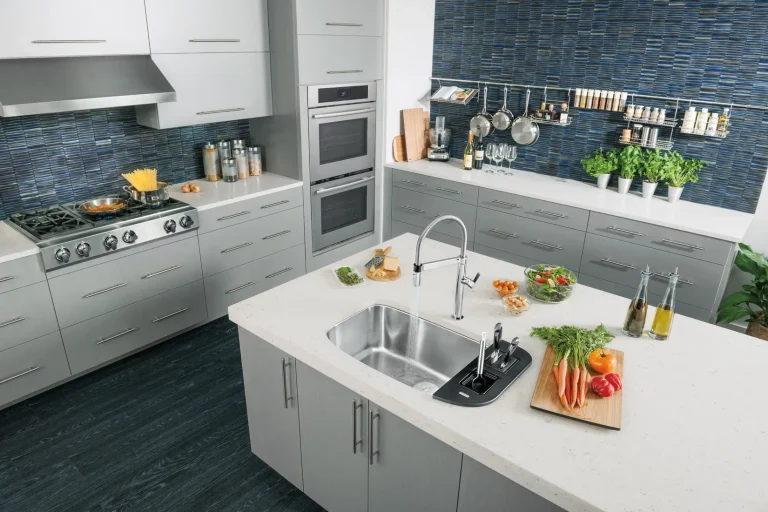
Task lighting earns its spot first. Under-cabinet strips push clean light straight onto the counter, so you never chop in your own shadow. Focused fixtures keep the busiest surfaces well lit – over the sink, the cooktop, and the cutting zones. The point is to erase shadows across every primary work surface, not to blast the whole room.
Color temperature carries as much weight as placement. For task areas, a neutral-to-cool range keeps colors true and edges crisp, which helps when you are reading a recipe or checking whether the chicken is done. Warmer tones suit dining and lounging, so many kitchens use both.
Fixture Types That Handle the Workload
Recessed lights provide broad, even coverage. Linear bars work well under cabinets and along counter runs. Puck lighting fits in smaller pockets, such as a coffee station or a display niche. Spacing is what makes any of them effective. We plan placement over each work area so the light coverage overlaps without gaps.
Layout drives the choice. A galley kitchen does well with evenly spaced recessed cans down its length. An L-shaped plan needs task light on both legs. Island layouts often pair recessed lighting overhead with pendants below, keeping the work surface bright and defined.
Statement Fixtures That Set the Style
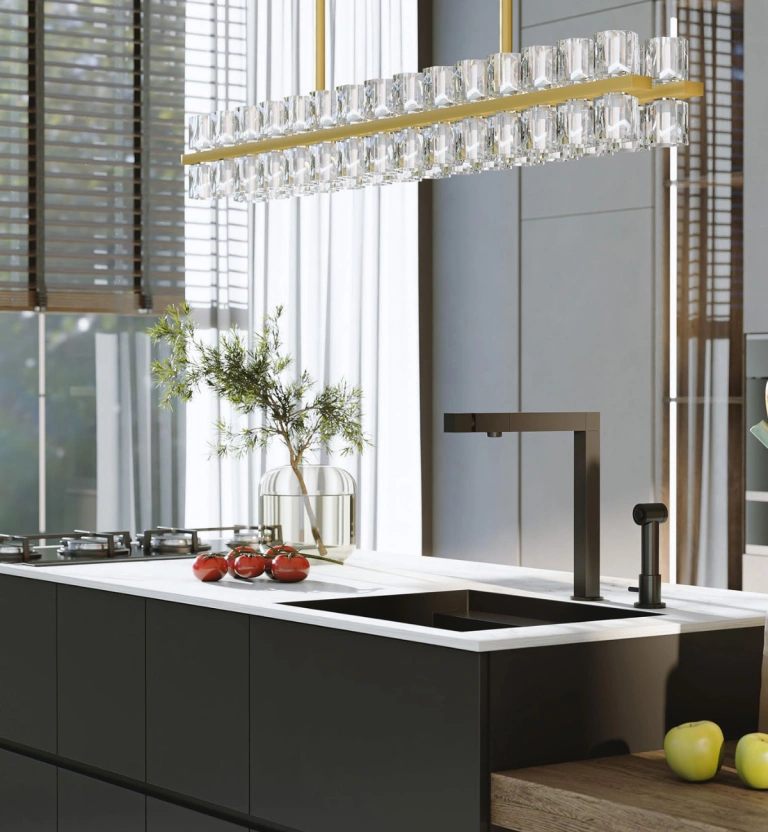
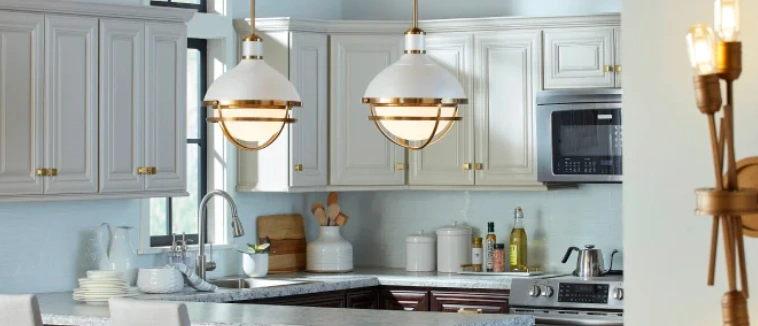
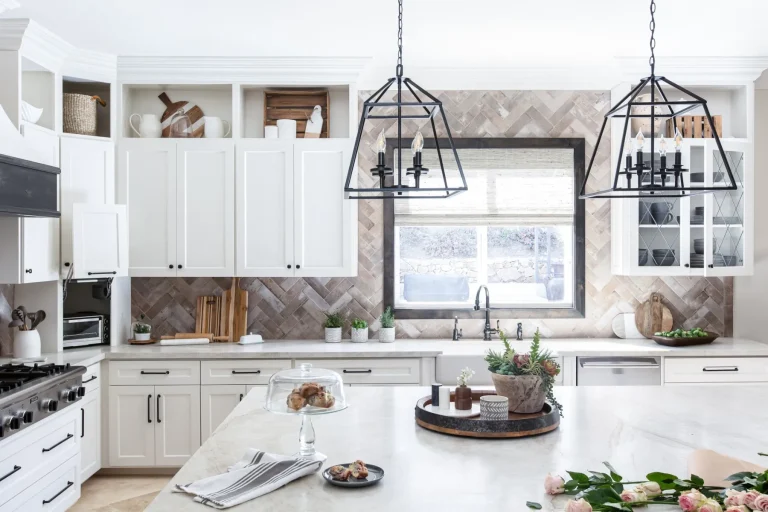
Once the function is covered, statement fixtures carry the style. Pendants over an island add scale and focus, anchoring the room’s busiest area. A chandelier above a breakfast nook or dining zone signals a place to gather and softens the whole feel. These are the pieces guests notice first, so they deserve real attention.
Coordination is the key. Fixture shape should relate to cabinetry lines and ceiling height. Low ceilings call for slim profiles that stay clear of sightlines. Taller ceilings can carry more presence. When scale and shape align with the room, luxury kitchen fixtures read as intentional rather than tacked on. These are the kitchen lighting ideas that have stood the test of time.
Finishes That Tie the Kitchen Together
Finish is what makes fixtures feel like part of the whole kitchen instead of an afterthought. Brass brings warmth, bronze adds depth, matte black grounds a lighter palette, and polished nickel reads clean and bright. The strongest results come from coordinating fixture finishes with faucets and hardware, which you can compare on our fixture finishes page.
Mixing metals works when you do it on purpose. A warm brass pendant next to matte black hardware can look considered, as long as one metal leads and the other supports. Random mixing rarely lands. Durability counts too, since a working kitchen sees heat, steam, and constant handling.
Planning Your Layout and Fixture Count
Before styles enter the conversation, we map fixtures to zones. Prep, cooking, cleanup, and dining each need their own light. Ceiling height shapes scale, so a tall room can carry larger pieces without crowding, while a standard ceiling calls for restraint. Even spacing keeps the light balanced, avoiding both dark corners and an overlit center.
A proper planning process can help you picture spacing before you commit. Plan wiring, switches, and dimmer placement early. Adding controls after the drywall goes up costs more and boxes in your options.
Smart and Energy-Efficient Lighting Choices
Dimmable and app-controlled fixtures give one kitchen several settings: bright light for prep, softer light for dinner, a low glow late at night. LED options last longer and pull less energy, which adds up over years of daily use. Adjusting brightness through the day keeps the kitchen functional and comfortable without running every light at full output.
How We Help You Coordinate It All
Choosing fixtures on a screen only takes you so far. At our Irmo showroom, you can compare finishes and fixtures in person, seeing how brass reads against your cabinet sample or how a pendant feels at real scale. We guide decisions on scale, placement, and product pairing, so each piece fits the room and works with your faucets and hardware.
Lighting is both a functional tool and a stylistic anchor. It decides how well you work in the kitchen and how the room feels once the work is done. Seeing finishes and scale in person clears out the guesswork that photos leave behind. Our team turns individual lighting decisions into a cohesive plan, coordinating layers, finishes, and placement based on how you use the space.
Schedule a consultation with us to compare kitchen lighting fixtures and finishes in person.
FAQs
How many light fixtures does a kitchen need?
There is no fixed number. Plan across zones instead. Most kitchens need ambient lighting throughout the room, task lighting over counters, the sink, and the cooktop, plus accent lighting for added depth.
What color temperature works best in a kitchen?
Task areas suit a neutral-to-cool range that keeps colors true and surfaces clear. Dining and lounging areas suit warmer tones that feel relaxed. Many kitchens combine both, often with dimmers so you can shift the feel through the day.
Should kitchen fixtures match the faucet finish?
They can, and matching creates a clean, cohesive look. You can also mix metals on purpose, letting one finish lead and another support.